
By Joe Hammett, CTS-D, Senior Audiovisual Designer with NV5 in Pittsburgh, PA
Direct view LED (dvLED) has evolved from a specialty display to a core design element shaping how organizations communicate, inspire, and engage. Its versatility in size, shape, and configuration enables a range of solutions from traditional rectangular displays to fully customized modular installations, curved surfaces, and seamless inside or outside corners. This flexibility allows dvLED to adapt to most architectural visions or experiential needs. Exploring those possibilities is one of the most enjoyable parts of AV design.
Integrating dvLED into a built environment requires more than simply selecting a display and mounting it on a wall. Architectural and engineering considerations play a defining role in system performance and longevity. dvLED generates heat, and proper ventilation and cooling is essential to prevent thermal stress, brightness throttling, and premature component degradation. Since dvLED systems draw significant and sometimes variable loads, designers must carefully plan power distribution. Dedicated circuits and redundancy strategies help protect uptime and equipment health.
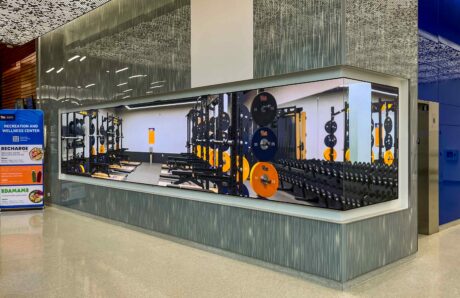
Structural design is equally important. dvLED systems rely on precise alignment. Even minor deviations in flatness or plumbness of a surface can create visible irregularities in the display surface. While many dvLED systems can mount directly to a finished wall, custom structural solutions are often needed for larger or curved installations. Recessed displays offer a sleek, seamless look, but they require detailed coordination to ensure adequate space for ventilation, conduit paths, and service access. Displays can often weigh over 1,000lbs, so proper support is paramount to ensure the wall can bear the added load. A frequent pitfall involves placing dvLED into a tightly enclosed cavity without proper airflow. Even with high‑quality equipment, this can compromise performance and shorten lifespan.
A consistent maintenance and calibration schedule is essential to keep brightness uniform and colors accurate across the entire canvas. Over time, minor variations can develop between modules. Regular calibration preserves image integrity. Cleaning routines prevent dust buildup that can trap heat. In mission‑critical environments, keeping spare modules on hand ensures quick replacement of any damaged or dead pixels. A well‑planned maintenance strategy extends the installation’s lifespan and protects the owner’s investment.
Ok, enough technical talk, let’s talk about exciting implementation strategies.
Digital Signage – The Next Frontier
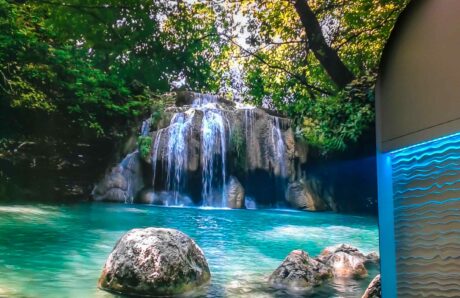
Across industries, dvLED has matured into a powerful medium for artistic expression and brand storytelling. Instead of functioning purely as a screen, it often serves as a digital canvas that enhances the character of a place. Designers increasingly use dvLED to create digital canvases that integrate seamlessly with built environments, transforming lobbies, public areas, retail spaces, and entertainment venues into dynamic visual experiences that bridge the digital and physical worlds.
dvLED can be incorporated as continuous digital ribbons or architectural bands that run through hallways or lobby spaces. These linear displays provide both branding and subtle wayfinding, guiding visitors while contributing to the overall aesthetic of the space. This streamlined incorporation allows content to follow the geometry of the architecture rather than appearing as a standalone screen. Large wall‑spanning displays or vertical digital elements integrated behind reception areas provide impactful brand moments as soon as a visitor enters the space. Displays that turn corners or wrap architectural volumes add dimensionality and extend content across sightlines in unexpected ways.
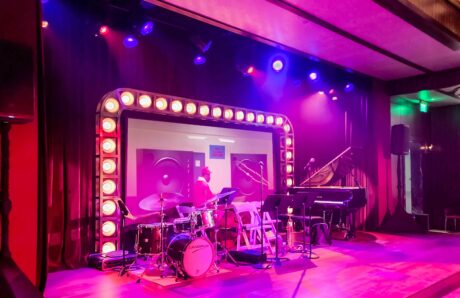
In hospitality and entertainment settings, dvLED frequently serves as high‑resolution digital backdrops that bring stages or feature areas to life. These installations create immersive, cinematic environments by surrounding performers or guests with vivid motion graphics. The seamless nature of dvLED allows designers to craft visual environments that change instantly with the mood or theme of an event.
For applications such as retail, signage, or experiential branding, the distance between the viewer and the display becomes even more critical. From a certain distance, the human
eye naturally blends pixels together, allowing larger pixel pitches to produce stunning imagery without unnecessary cost.
Early in the design process, consider content resolution. When pixel pitch and content resolution are mismatched, scaling or aspect ratio adjustments may be required, which can degrade visual fidelity. Choosing the right combination ensures a crisp, consistent viewing experience that complements the built environment.
Pixel pitch, measured in millimeters, refers to the distance between individual LED pixels. It is one of the most critical factors influencing image clarity and the appropriate viewing distance for a display. Smaller pixel pitches provide higher resolution and a smoother image for close‑up viewing, while larger pixel pitches are appropriate for long‑distance viewing and cost‑efficient large‑scale installations.
XR Stages – Immerse Yourself
dvLED has become increasingly popular in Extended Reality (XR) stages, virtual production, and broadcast environments, where it serves as both a lighting source and a dynamic scenic background. However, filming against an LED wall introduces unique challenges, particularly moiré patterns created by the interaction between the LED pixel grid and a camera’s sensor.
Avoiding moiré requires a combination of technical adjustments and thoughtful planning. Adjusting camera angle and distance often helps break the alignment between the sensor pattern and the LED grid. Using lenses with the right focal length and fine‑tuning shutter speed and aperture can also make a measurable difference. Choosing dvLED with a high refresh rate is essential for smooth motion capture and eliminating flicker. In professional production environments, using genlock to synchronize the dvLED system with the camera ensures frame‑accurate timing and helps eliminate tearing or rolling artifacts.
In one live production setting, the team successfully resolved a persistent moiré pattern by adjusting the camera’s angle of approach and modifying shutter timing, combined with enabling a high‑refresh‑rate mode on the dvLED wall. The result was a clean image that held up under broadcast scrutiny and delivered a seamless on‑air appearance.
What are projectors again?
dvLED technology is rapidly taking the place of traditional projectors and screens. Offering more than just a platform for presentations, it is transforming spaces by seamlessly blending presentation capabilities with dynamic digital signage and interactive engagement. Unlike projectors, which often require controlled lighting and offer limited shape and integration flexibility, dvLED displays can be customized to fit a wide range of architectural forms and environments, from expansive wall installations to immersive digital ribbons. This versatility allows presenters to deliver with exceptional clarity and vibrancy, while also enabling the same display to showcase branded content, real-time information, or interactive elements when not in use for meetings or events. As a result, spaces equipped with dvLED become multifunctional, supporting the practical needs of presentations and the creative demands of experiential design, thereby enhancing communication and the overall atmosphere.
In presentation spaces, such as auditoria, ballrooms, and large meeting rooms, pixel pitches between 1.2 mm and 2.5 mm often strike the right balance. They offer clarity suitable for detailed content such as data, presentations, and HD video while maintaining large image sizes. In smaller environments such as classrooms or compact meeting rooms, emerging MicroLED technology with pixel pitches between 0.7 mm and 0.9 mm offer exceptional sharpness from an appropriately sized display that for the space. As dvLED continues to evolve, these finer pitches are making LED viable in environments that once relied exclusively on Projectors or LCD panels.
Alternative Approaches – Does it always have to be expensive?
As audiovisual display technologies rapidly advance, selecting the right solution now involves not just performance and design considerations but also careful cost analysis.
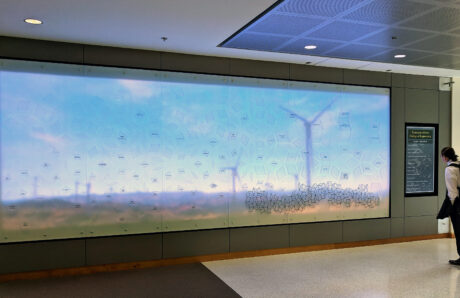
With options ranging from traditional projectors to high-end dvLED installations and innovative layered approaches, finding the ideal balance between budget and impact is essential for creating environments that are both visually impressive and financially sustainable.
Layered display techniques let designers merge digital visuals with physical spaces using translucent materials or sculptural forms paired with low-resolution LED screens, creating soft, ambient lighting. Motion video and vibrant colors interact with surfaces to create a dynamic effect, allowing digital content to blend into the architecture in a subtle way. The result is a sophisticated balance of technology and design, which is ideal for donor features, or cultural environments where digital content must complement rather than overpower the architectural intent. The University of Iowa Donor Wall uses translucent glass panels with LED lighting and digital content to honor donors in a visually engaging yet understated manner, exemplifying how layered approaches can elevate both the aesthetic and emotional impact of a space.
Journey Walls, made of glass panels imprinted with custom graphics and an LED video
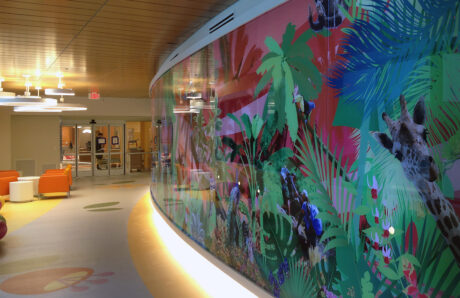
curtain, greet patients and visitors with a video presentation as they enter each floor at St. Jude Children’s Research Hospital. Exploring layered approaches, blending translucent materials or sculptural elements with low‑resolution LED video displays create a soft, ambient glow in which motion video, colors, and texture interact with physical surfaces. This technique allows designers to introduce digital content subtly and artfully, fostering a harmonious integration of technology and architecture. Such installations are particularly effective in spaces where the goal is to enhance the environment without dominating it, offering a visually engaging experience that feels both modern and timeless.
Joe Hammett is an Audiovisual Designer with over 25 years of experience in the technology industry. If you’d like to further discuss dvLED or other display options, share your thoughts with Joe and our team of expert audiovisual designers at Tech@NV5.com.