
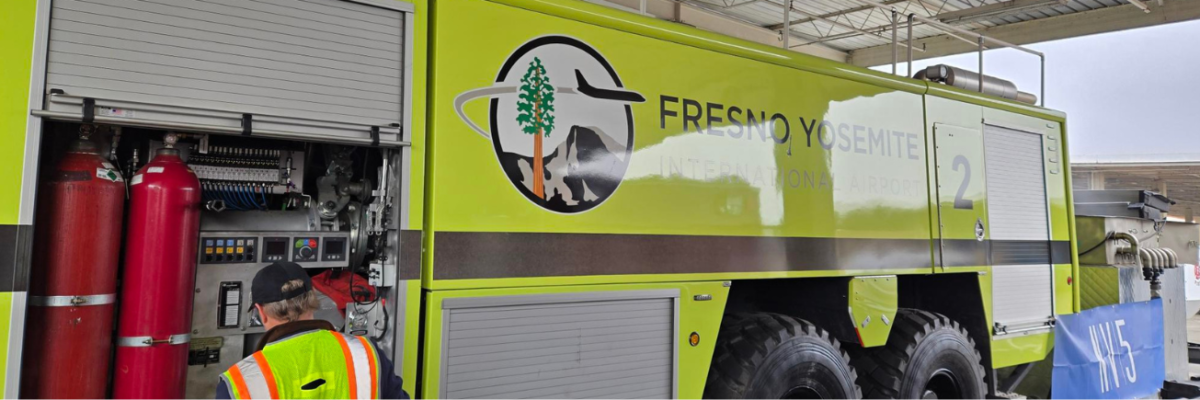
Fresno International Airport | City of Fresno
Project Overview
Fresno International Airport (FAT), operated by the City of Fresno, initiated a strategic transition from aqueous film-forming foam (AFFF) to fluorine-free foam (F3) in response to updated Federal Aviation Administration (FAA) requirements and increasing regulatory scrutiny surrounding per- and polyfluoroalkyl substances (PFAS).
For decades the FAA has required the use of AFFF in Aircraft Rescue and Fire Fighting (ARFF) vehicles to suppress jet fuel fires at airports listed with Part 139 Certification Status. AFFF contains relatively high concentrations of PFAS and its presence in legacy AFFF has created long-term environmental liabilities and financial exposure for the end user Fresno International Airport required a structured approach for the transition that would eliminate PFAS-containing materials while maintaining uninterrupted ARFF indexing and FAA classification requirements.
NV5 was engaged to develop and implement a comprehensive F3 Transition Plan that would reduce liability, ensure regulatory compliance, and protect operational continuity while protecting human health and the environment.
The Challenge
Transitioning away from PFAS-containing firefighting foam in an active airport environment presents both operational and regulatory complexity. ARFF vehicles must remain compliant with FAA indexing requirements, and any reduction in fire response capability can directly impact airport operations.
FAT’s Transition Plan required:
- Coordination of treatment activities without disrupting airport fire protection readiness
- Full removal and treatment of legacy AFFF from ARFF vehicles and facilities
- Decontamination and preparation of vehicles for fluorine-free foam compatibility
- Proper characterization and disposal of PFAS-containing waste
- Failure to properly sequence the transition could have resulted in operational disruption, regulatory non-compliance, or long-term environmental liability.
The Solution
NV5 began by developing a detailed Transition Plan in December 2024. The plan evaluated available treatment technologies, disposal pathways, and associated costs, thereby providing the City of Fresno with a clear decision framework before implementation began.
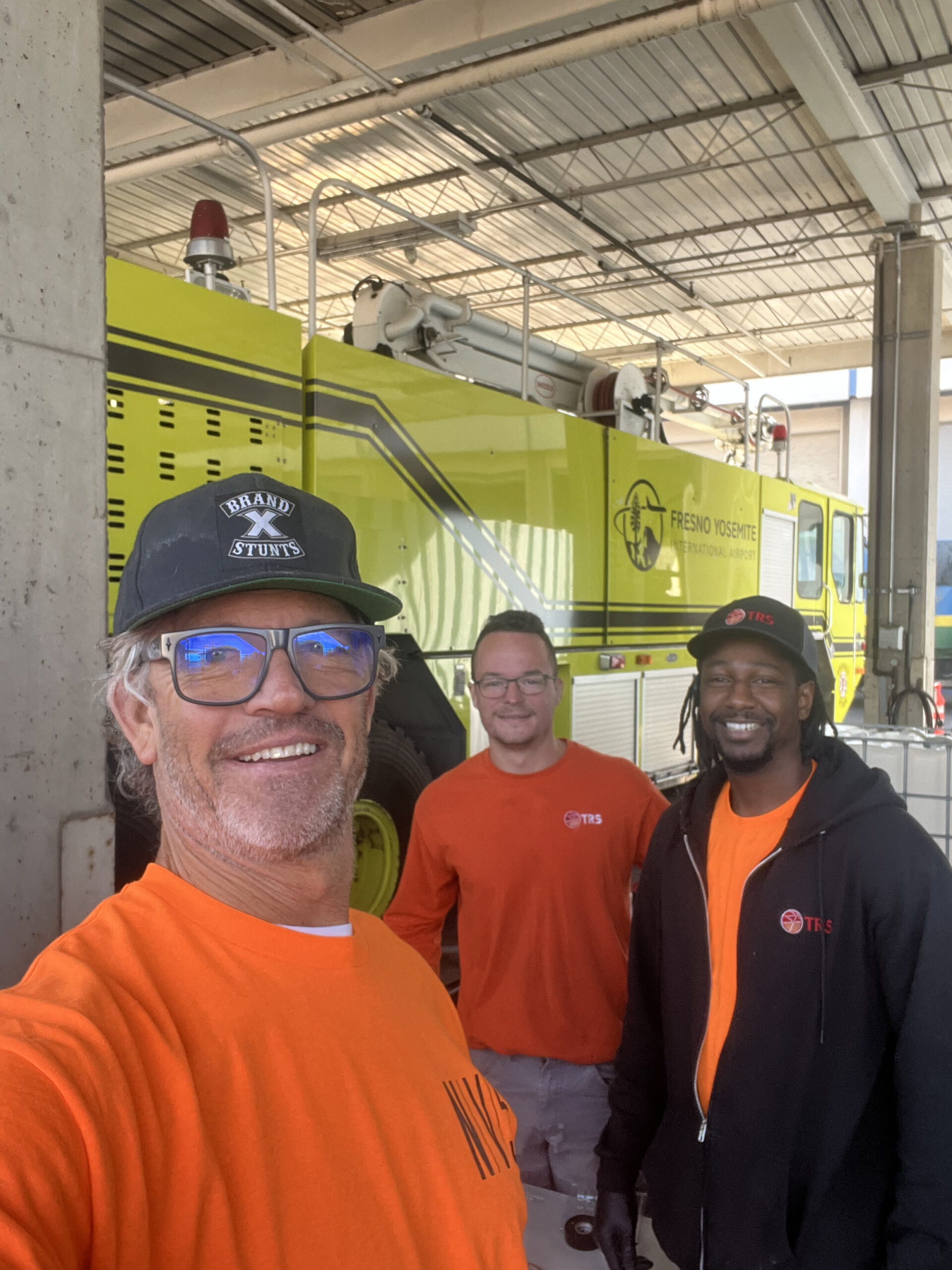
Following approval of the recommended approach, NV5 oversaw execution of the ARFF vehicle treatment program. Specialized treatment services were performed by TRS under NV5 oversight to ensure safety, quality control, compliance alignment, and schedule adherence.
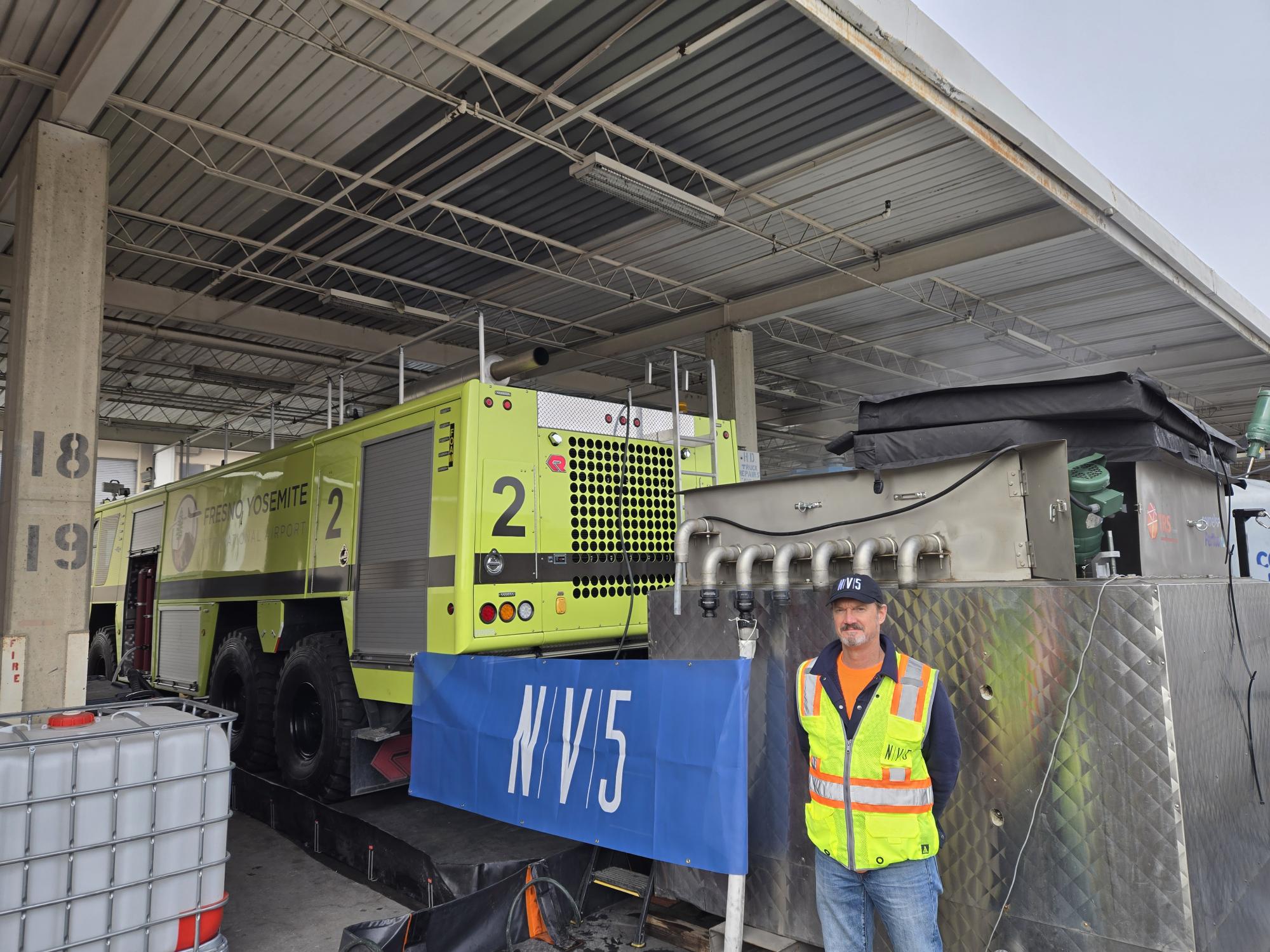
The scope included drainage and rinsing of legacy AFFF from each vehicle ARFF, treatment of each ARFF vehicle using TRS’s patent PerfluorAd batch treatment system to remove AFFF and ensure compatibility with F3, sampling and verification, waste characterization, and coordination of disposal at a permitted Class I landfill in Nevada.
Treatment activities were carefully sequenced to maintain FAA-required ARFF indexing throughout the process. As recommended in the Transition Plan, Fresno International Airport also removed all equipment and components impacted by AFFF from active operations, further reducing PFAS exposure and future liability.
Measurable Results
The project delivered both operational and compliance outcomes:
- Two ARFF vehicles were safely and successfully treated and certified for use with F3
- Their third ARFF vehicle was fully drained of AFFF and decommissioned from service.
- All AFFF was removed from airport operations and facilities, protecting human health and the environment
- The project was completed on schedule and within budget
- FAA indexing and airport operations were maintained throughout treatment
- Regulatory compliance was achieved in accordance with current FAA transition requirements
By combining upfront planning with disciplined field execution, FAT eliminated PFAS-containing foam from its firefighting program without compromising operational readiness.
Field Execution
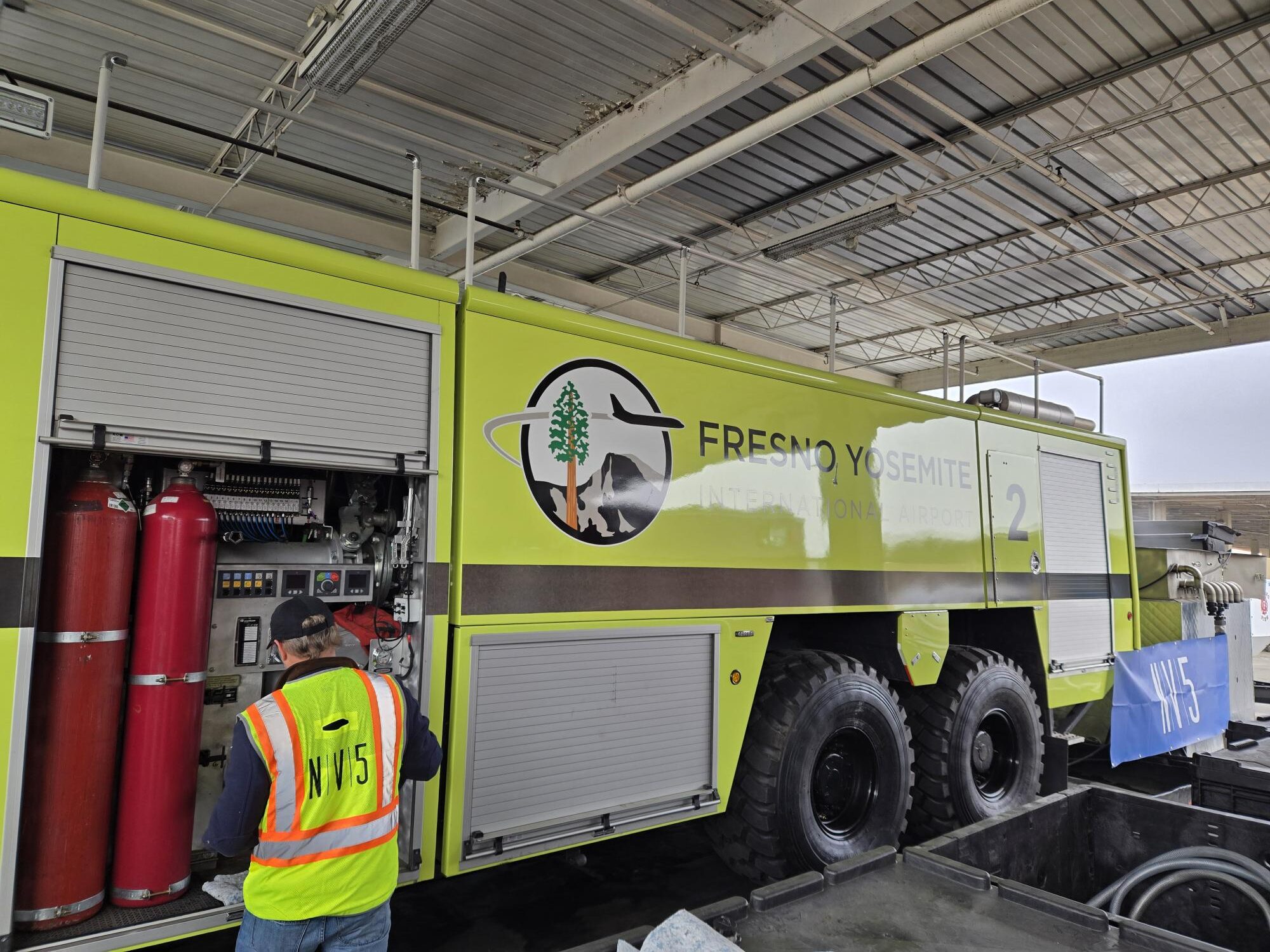
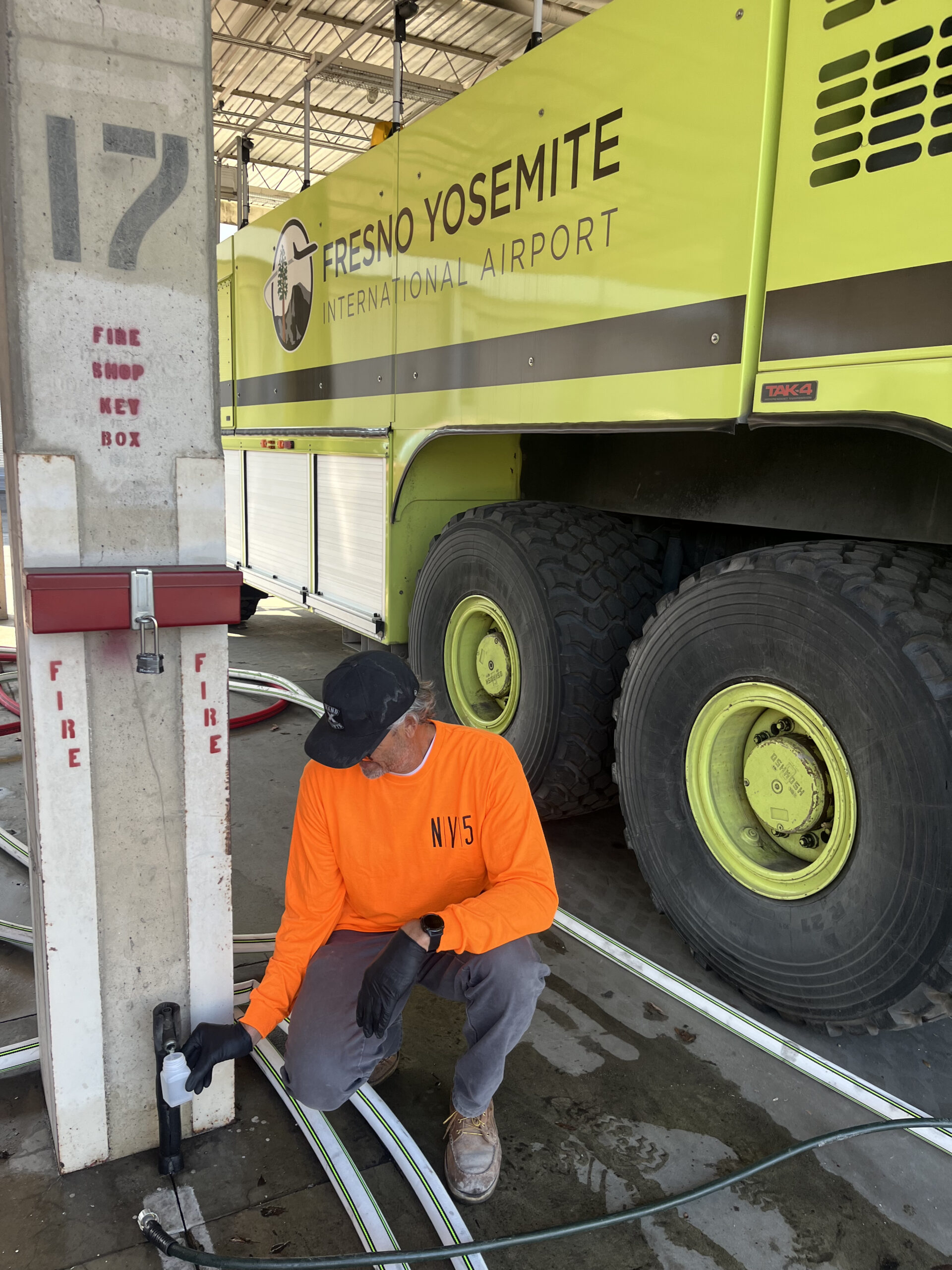
NV5 personnel provided oversight during treatment activities, including source of treatment sampling, process verification, and coordination between airport personnel and TRS. Clear health and safety planning, documentation and quality control procedures ensure regulatory compliance, protection of human health and the environment, and reduced liability for FAT.
Delivering Confidence in your F3 Transition Plan
The successful transition at FAT demonstrates how proactive planning and structured execution can eliminate PFAS-related liabilities while protecting human health and the environment and preserving operational continuity. Through strategic evaluation, regulatory alignment, and disciplined field oversight, NV5 enabled FAT to achieve compliance without disrupting airport indexing requirements.
As airports nationwide comply with current PFAS regulations and firefighting foam requirements, early planning and utilization of the most current technologies are essential to managing risk, controlling costs, protecting human health and the environment, and maintaining airport operations.
If your airport or municipality is evaluating a transition from PFAS-containing AFFF, NV5 will provide comprehensive planning, treatment technologies, waste management services, and regulatory compliance support.
Contact our experts to discuss how we can support your F3 Transition Plan process.