

Aerial Thermal Bridge Inspection for Faster, Smarter Infrastructure Decisions

Improve asset management, reduce unnecessary field work, and prioritize maintenance investments with confidence

Every transportation agency faces the same challenge: more bridges to inspect than time and resources allow. 

NV5’s aerial thermal bridge inspection solution helps DOTs rapidly identify potential bridge deck delamination across hundreds of structures, allowing inspection teams to focus on detailed evaluations where they’re needed most.

Screen the Network. Target the Risk.

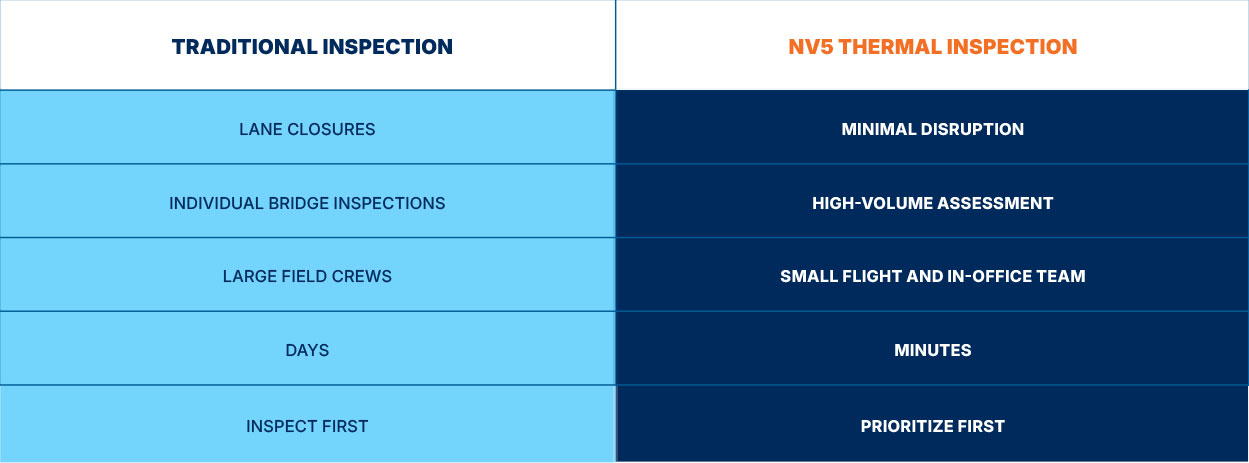
Current bridge inspection methods are effective, but they weren’t designed for assessing hundreds or thousands of bridges quickly. Traditional chain-drag inspections require lane closures, traffic control, on-site field crews, and significant time to evaluate each bridge individually.

NV5 changes that.

Detect Potential Bridge Deck Delamination Before It Becomes a Bigger Problem

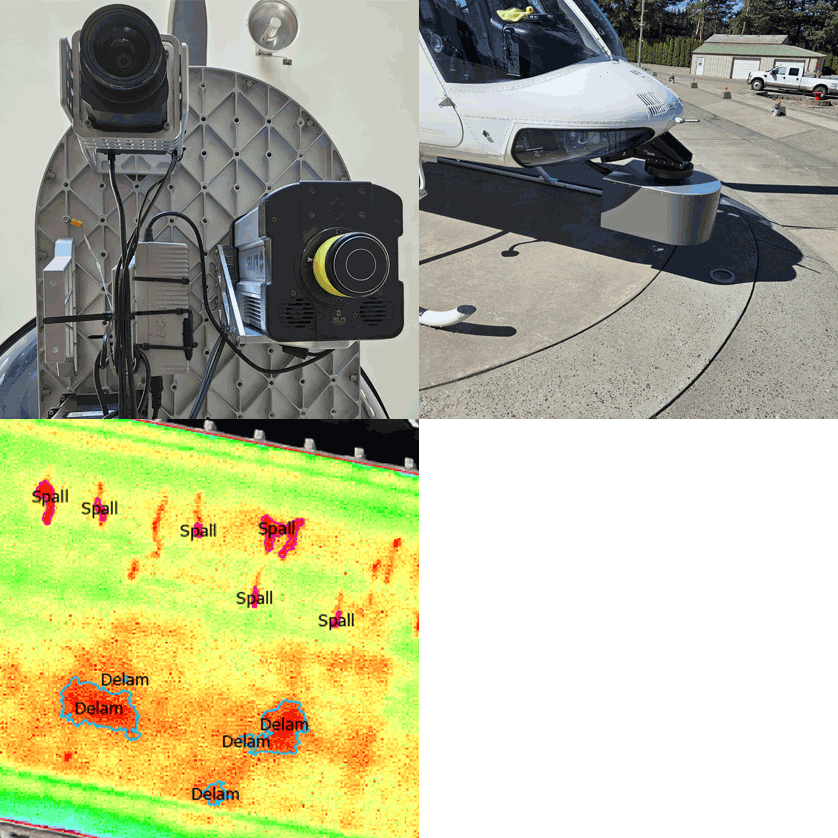
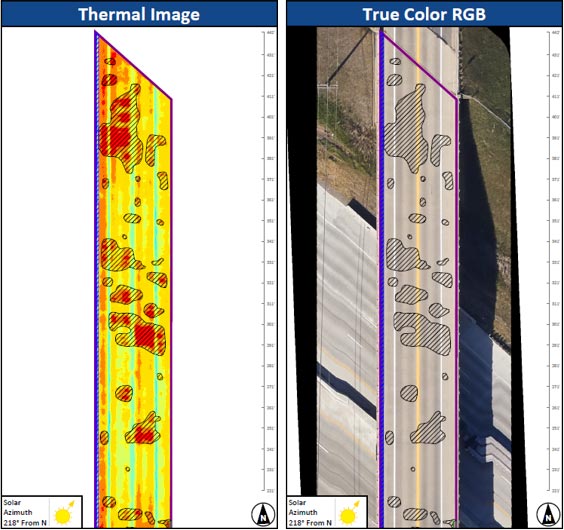
Using aerial infrared sensors, NV5 captures subtle surface temperature variations across a bridge deck. Sound concrete transfers and retains heat differently than concrete that has begun to delaminate. As the bridge naturally heats and cools throughout the day, these differences create measurable thermal patterns that indicate potential subsurface deterioration.

By analyzing this thermal data alongside high-resolution imagery, NV5 identifies areas that warrant further investigation, allowing agencies to focus resources where they’re needed most. Rather than conducting labor-intensive inspections across every bridge, transportation agencies can use infrared bridge inspection as an efficient first step in prioritizing maintenance, planning detailed evaluations, and allocating limited inspection budgets more effectively.

Inspect More Bridges. Make Better Decisions.

Managing bridge networks requires balancing safety, budgets, staffing, and competing infrastructure priorities. Traditional inspection methods provide valuable information, but evaluating large bridge inventories one structure at a time can be time-consuming, costly, and disruptive.

NV5’s aerial thermal bridge inspection solution helps transportation agencies assess more bridges in less time, giving asset managers the information they need to prioritize inspections, allocate resources effectively, and make smarter maintenance decisions across their entire bridge network.

Rapidly assess dozens of bridges during optimal thermal conditions, enabling agencies to evaluate large bridge inventories in a fraction of the time required for traditional inspection methods.

Identify bridges with potential bridge deck delamination before deploying field crews, allowing detailed inspections to focus on the structures that need them most.

Reduce the need for extensive traffic control, large field crews, and unnecessary detailed inspections, helping agencies stretch limited maintenance and inspection budgets further.

Incorporate thermal inspection data into bridge management programs to support data-driven maintenance planning, capital improvement strategies, and long-term asset lifecycle decisions.

Collect high-quality inspection data with little or no impact to traffic, reducing bridge closures while improving the efficiency of network-wide bridge assessments.

How Thermal Bridge Inspection Fits into Your Asset Management Program

Thermal bridge inspection is most valuable when viewed as part of a broader bridge asset management strategy. Rather than replacing detailed bridge inspections, it provides transportation agencies with a fast, data-driven way to identify where inspection resources will have the greatest impact.

By rapidly screening large bridge inventories, agencies can move from reactive inspections to a more strategic, risk-based approach, focusing detailed evaluations, maintenance funding, and repair efforts where they’re needed most.

A Smarter Approach to Bridge Asset Management

Begin with your complete bridge inventory, whether evaluating a corridor, a district, or an entire statewide transportation network.

Use aerial infrared thermography to rapidly assess bridge decks and identify thermal anomalies that may indicate potential concrete delamination or deterioration.

Rank bridges based on inspection results, helping asset managers identify the structures most likely to require additional evaluation.

Focus field crews and traditional bridge inspection methods on the highest-priority structures, reducing unnecessary inspections while improving the effectiveness of detailed evaluations.

Use inspection results to support maintenance planning, capital programming, and data-driven asset management decisions across the bridge network.

Direct repair funding where it will have the greatest impact, helping extend asset life, improve public safety, and maximize infrastructure investment.

Proven Across Multiple DOT Programs

From statewide bridge programs to targeted corridor assessments, NV5 has successfully completed aerial thermal bridge inspection projects, demonstrating how infrared thermography can improve inspection efficiency, reduce field costs, and support data-driven bridge asset management.

Featured Project

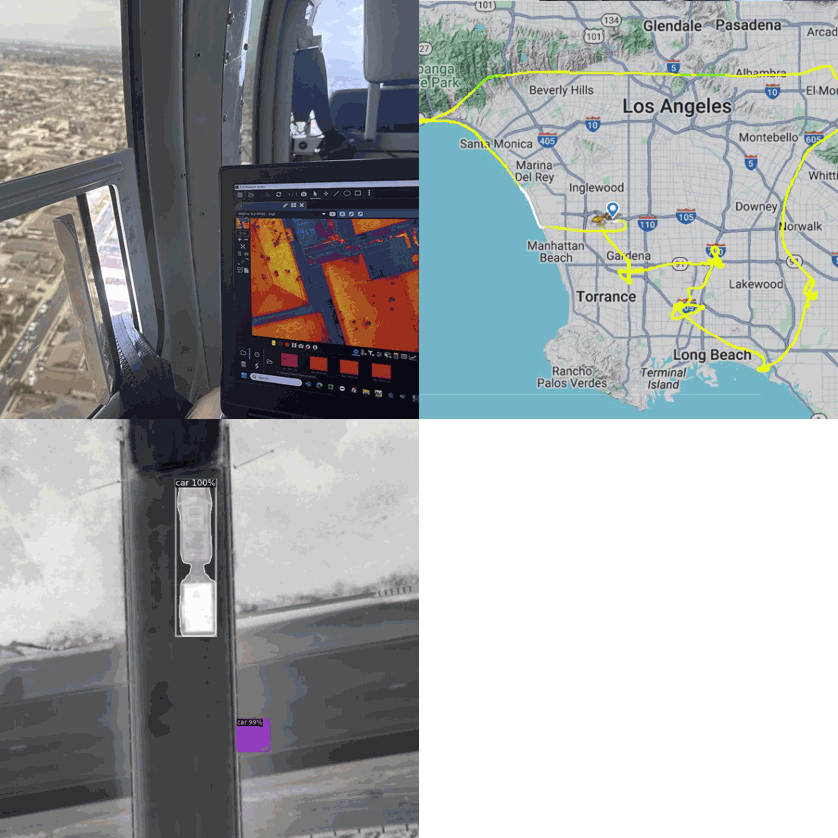
Los Angeles County Bridge Assessment

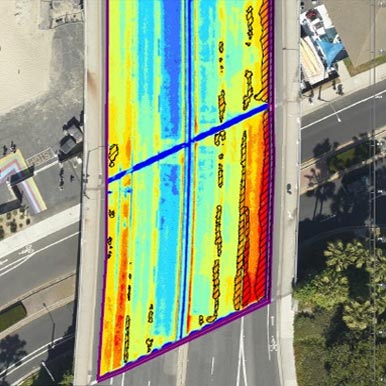
NV5 used aerial thermal imaging to evaluate 22 bridge decks, rapidly identifying areas of potential delamination and providing the county with actionable information to prioritize detailed inspections and maintenance planning. The project demonstrated how thermal bridge inspection can efficiently screen multiple structures while minimizing disruption to traffic and reducing the need for extensive field investigations.

Frequently Asked Questions

No. Thermal bridge inspection is a screening and prioritization tool, not a replacement for established bridge inspection methods. It helps identify areas of potential deterioration that may require additional investigation, allowing agencies to focus detailed inspections where they are likely to provide the greatest value. Used as part of a comprehensive bridge inspection program, thermal imaging improves efficiency while supporting better maintenance planning.  

Bridge deck delamination occurs when concrete begins to separate beneath the surface, most often as reinforcing steel corrodes and expands. Because the damage initially develops below the surface, it may not be visible during routine visual inspections. If left untreated, delamination can progress to spalling, reduced service life, and more costly repairs. 

Infrared thermal imaging measures subtle temperature differences across a bridge deck. Areas of delaminated concrete transfer and retain heat differently than sound concrete, creating thermal patterns that can indicate potential subsurface deterioration. These thermal anomalies help identify areas that warrant additional investigation using traditional inspection methods. 

The number of bridges that can be assessed depends on factors such as bridge size, weather conditions, flight planning, and project location. However, aerial thermal bridge inspection enables agencies to evaluate significantly more bridges in a single day than traditional field inspection methods, making it an efficient solution for large bridge inventories. 

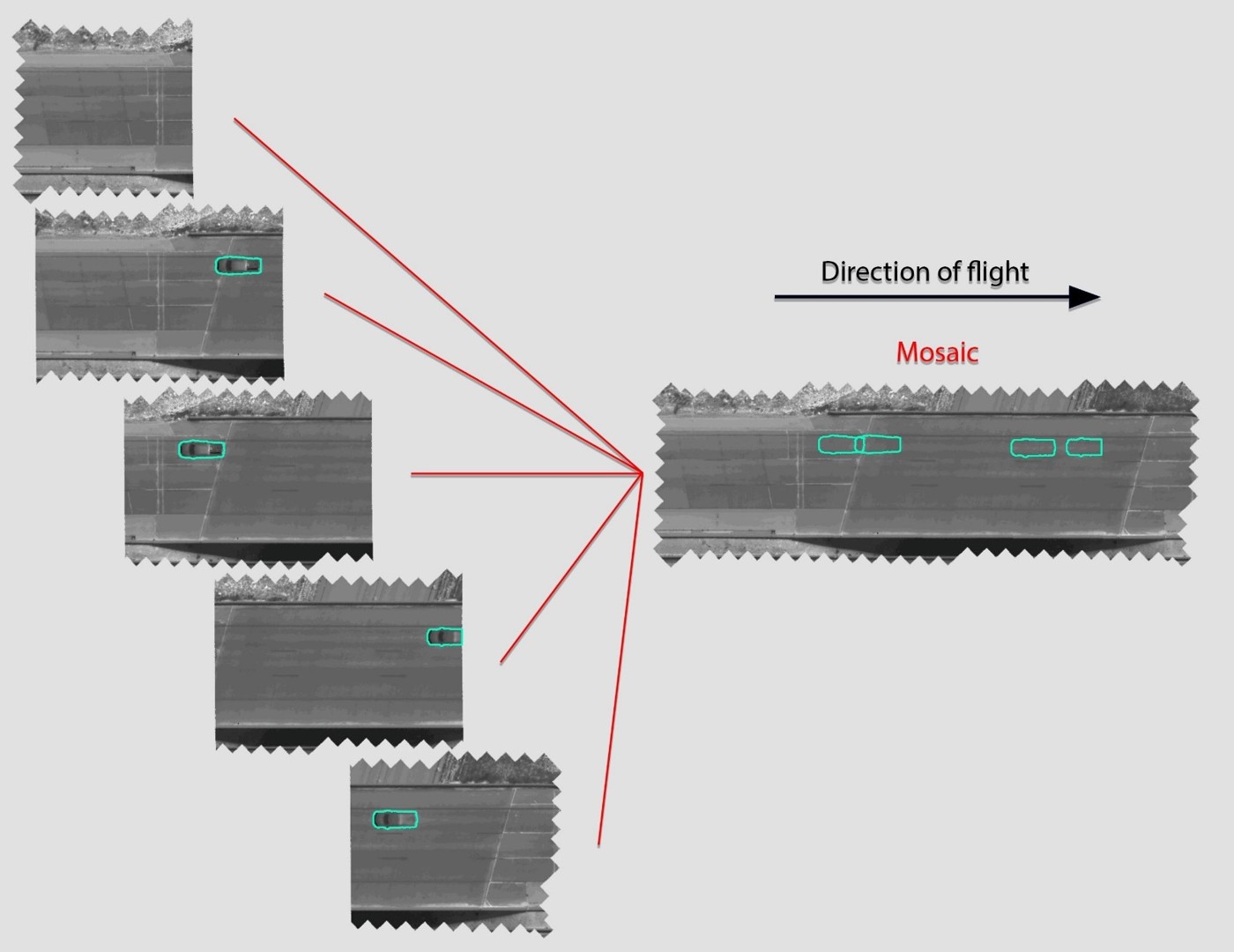
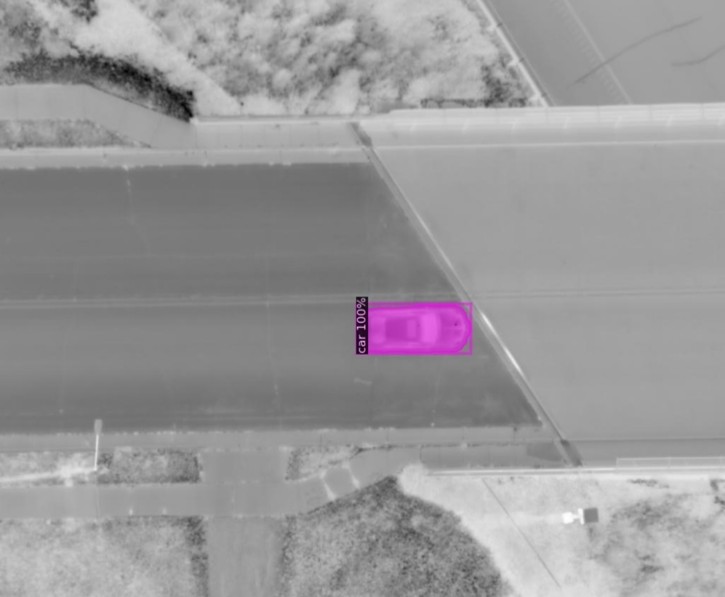
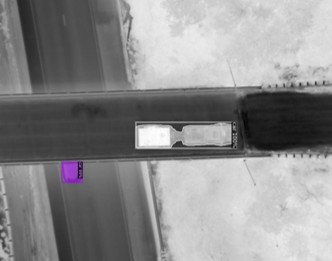
In most cases, yes. Because the data is collected from an aircraft, thermal bridge inspections can often be completed with little or no disruption to traffic. This minimizes the need for lane closures, reduces impacts on the traveling public, and lowers traffic control costs. A post-collection data processing step masks out the vehicles possible by high overlapping imagery.
Thermal bridge inspection is primarily used to identify potential bridge deck delamination and other subsurface concrete deterioration that produces measurable thermal differences. The technology helps agencies locate areas that may require further evaluation, supporting more targeted inspection and maintenance efforts. 

Thermal bridge inspection is well suited for concrete bridge decks where agencies need to rapidly assess bridge condition, prioritize maintenance, or evaluate large bridge inventories. It is particularly valuable for statewide bridge programs, corridor assessments, and asset management initiatives where speed, efficiency, and data-driven decision-making are priorities.

Thermal bridge inspection provides transportation agencies with actionable information that supports better decision making. By rapidly screening bridge inventories and identifying structures that may require additional evaluation, agencies can prioritize inspections, optimize maintenance budgets, reduce unnecessary field work, and make more informed infrastructure investment decisions.

Whether you’re evaluating a single bridge, prioritizing maintenance across an entire transportation network, or exploring new approaches to bridge asset management, NV5 can help you determine if aerial thermal bridge inspection is the right fit for your program.

Contact Us

Fill out the form below to download the handbook.

Form #1 - Redirection to PDF

Form #2 - Sends email containing the link to the PDF

"*" indicates required fields

This field is for validation purposes and should be left unchanged.

eNewsletter - NV5 Real Estate Transaction Services

Contact NV5 Real Estate Transaction Services

Download NV5 2022 Compliance Calendar

Please fill out the form below. After successful form submission, you will be redirected to the requested file. Thank you.

"*" indicates required fields

This field is for validation purposes and should be left unchanged.
We are an equal opportunity employer. All applicants will be considered for employment without attention to race, color, religion, sex, sexual orientation, gender identity, national origin, veteran or disability status. We ensure nondiscrimination in all programs and activities in accordance with Title VI of the United States Civil Rights Act of 1964. If you need more information or special assistance for persons with disabilities or limited English proficiency, contact MaryJo OBrien at (954) 495-2112. Persons with hearing-and speech-impairments can contact the NV5 by using the Virginia Relay Service, a toll-free telecommunication device for the deaf (TDD). Call 711 for TTY/TDD.
This field is hidden when viewing the form

Hyperspectral Imaging - Technically Speaking

Our internal innovation and development team constantly analyzes new technology and develops solutions to meet our client’s challenges. Our Technically Speaking series is one way we share our technical findings with the professional community. 

Please tell us a little about yourself by filling out the form below, and we’ll share the document with you, thanks!

Accuracy Part 1- Technically Speaking

Our internal innovation and development team constantly analyzes new technology and develops solutions to meet our client’s challenges. Our Technically Speaking series is one way we share our technical findings with the professional community. 

Please tell us a little about yourself by filling out the form below, and we’ll share the document with you, thanks!

Prune Optimization Webinar Recording

NV5 Geospatial releases a new predictive modeling platform for vegetation management that uses existing lidar and historical data to identify the relative level of asset risk from trees by quantifying the potential for causing asset damage. 

Please tell us a little about yourself by filling out the form below, and we’ll share the document with you, thanks!

Topobathy Lidar - Technically Speaking

Our internal innovation and development team constantly analyzes new technology and develops solutions to meet our client’s challenges. Our Technically Speaking series is one way we share our technical findings with the professional community. 

Please tell us a little about yourself by filling out the form below, and we’ll share the document with you, thanks!

Contact Geospatial

Contact Geospatial