
By Kelly Stumpf, PMP
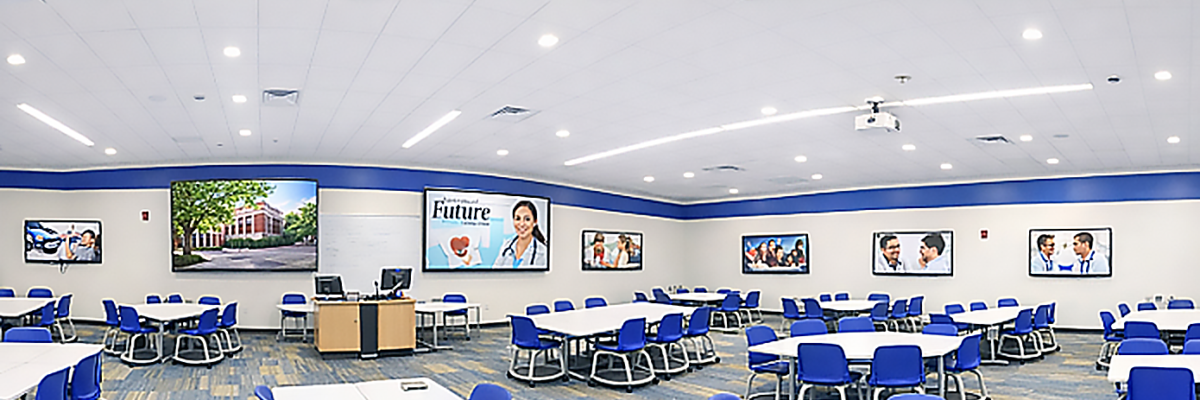
As learning environments continue to rely more heavily on integrated instructional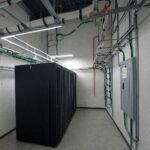 technologies, early coordination between furniture and technology design has become critical to project success. Furniture decisions are no longer purely aesthetic or ergonomic. They play a direct role in how well technology performs, how easily instructors can teach, and how effectively students can engage. When furniture, AV systems, and infrastructure are designed in silos, even well intentioned solutions can create avoidable challenges. A coordinated, intentional approach helps ensure technology is both functional and seamlessly incorporated into the learning environment.
Planning for Technology Housing
One of the earliest and most impactful decisions is where technology equipment will be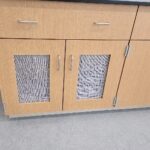 located within a room. Design teams should establish whether AV equipment will be centralized in a dedicated AV or IDF room or located directly within the instructional space. When equipment remains in the room, it is essential to confirm whether it will be integrated into custom millwork, a local AV equipment room, an AV‑specific cabinet, or a lectern or teaching station. Each option carries implications for noise control, cooling and ventilation, power, spatial requirements, and ADA‑compliant access. These decisions also affect scope and responsibility, because some campuses assign technology housing to the AV scope while others include it in the furniture package. Aligning these expectations early avoids scope gaps, late design changes, and compromised performance.
Connectivity & Cable Management
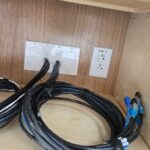 Connectivity and cable management are another area where early coordination pays dividends. Furniture‑integrated power and data solutions vary widely in quality, durability, and capacity. AV‑grade cable cubbies and connection plates are designed to support frequent use and evolving technology needs, while standard furniture solutions may be more limited. When custom furniture is used, exact cutout dimensions for power, data, and control interfaces must be coordinated early in the design process. This avoids field modifications, preserves furniture warranties, and results in a cleaner, more professional installation that supports long‑term maintainability.
Right‑Sizing the Lectern or Teaching Station
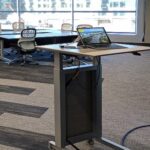 Teaching stations and lecterns require particular attention to right‑sizing and workflow. What appears satisfactory at first glance can quickly become undersized once all required equipment is accounted for. Displays, keyboards, mice, laptops, microphones, control interfaces, document cameras, and future expansion all compete for space. Beyond footprint, ergonomics and maneuverability are critical. Instructors should be able to operate technology comfortably without awkward reaches or obstructed views. As with equipment housing, teams must align early on whether lecterns and teaching stations fall under the furniture or AV scope, and how campus standards influence those selections. Adequate planning ensures the teaching station supports instruction rather than becoming a constraint.
Room Coordination & Sightline Protection
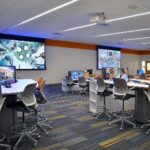 Furniture placement also plays a key role in dictating sightlines and instructional visibility. Poorly coordinated layouts can block displays, obscure marker boards, or interfere with students’ views from various seating elevations. Monitors mounted on lecterns or carts can unintentionally obstruct sightlines if their height and placement are not carefully reviewed. Evaluating viewing angles from multiple locations during design helps ensure that furniture supports, rather than undermines, the instructional integrity of the room.
Power & Data Infrastructure
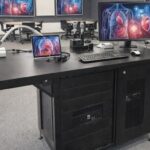 Power and data delivery to furniture should be a focus early on and coordinated across disciplines. Whether services are routed from walls, floors, or ceilings, designers must consider necessary bends and turns without strain, access points, and long‑term durability. Routing that looks feasible on paper can become problematic if furniture movement, cable strain, or maintenance access are overlooked. Thoughtful coordination results in infrastructure that is flexible, reliable, and easier to support over the life of the space.
Successful technology‑enabled learning environments result from collaboration. When architects, interior designers, furniture planners, and technology consultants engage early and align on responsibilities, standards, and constraints, furniture becomes an enabler rather than an obstacle. A coordinated approach not only reduces rework and risk. It creates learning spaces that are intuitive, reliable, and designed to support both today’s needs and tomorrow’s technologies.
Kelly Stumpf, PMP is a Principal Consultant in Houston, TX. Kelly is an award-winning project consultant: Engineering News Record honored her for accomplishments in project management, strategic process and business development with a Mountain Region Top 20 Under 40 award.